
Most log home owners do not hire a contractor because they want to. They hire one because certain log home maintenance feels out of their depth. This might be something like failing stain, persistent drafts, water staining, or chinking that keeps cracking no matter how many times it’s patched.
The tricky part is that once you hire someone, you’re left to trust in work that you may not fully grasp, and understandably so. This guide is designed to help you judge quality without hovering, guessing, or learning the hard way after money has already changed hands.
Start With the Estimate: Do They Diagnose or Just Quote?
A quality log home contractor does more than price a project. Because wood is an organic material, which will change over time, they try to understand why the cabin is behaving the way it is.
Healthy estimate behaviors:
- They ask about cabin age, prior products used, and maintenance history
- They inspect lower logs, corners, and high-exposure walls
- They talk about drainage, rooflines, and water pathways
- They explain prep and drying time that will accompany the work
Potential red flags:
- A fast price with no close inspection
- No mention of moisture, water management, or airflow
- Vague promises (we’ll seal everything up; we’ll stain it)
- No clarity on products, steps, or scope
If you suspect underlying issues, it may be time for professional evaluation and repair planning:
The Quality of Log Home Maintenance is in the Prep Work
Homeowners often judge a job by the final appearance. Professionals judge by the full scope of the work, and that begins with prep.
Good log home maintenance and care prep typically includes:
- Cleaning that removes mildew, dirt, and residue
- Protecting plants, decks, stonework, and windows
- Allowing the wood to dry properly before any new product is applied
- Removing failing finishes instead of coating over them
Shortcuts in log home care that can lead to early failure:
- Staining over dirty logs or mildew
- Applying products to damp wood
- Skipping removal of peeling or chalky finishes
- Ignoring problem areas because they are hard to reach
If your home needs aggressive surface prep, blasting may be part of the process. Done correctly, this creates a clean surface that accepts stain evenly. Done poorly, it can scar logs or create uneven absorption.
Materials Make the Difference: Ask What They Are Using and Why
You don’t need to memorize product brands to ask smart questions. You simply need to know what each material is supposed to do.
Basic questions you can ask:
- What stain or sealant system are you using, and why is it a fit for this cabin?
- How are you handling UV exposure on high-sun walls?
- What chinking or caulking product will you use, and where?
- What is the cure and dry time before weather exposure?
Red flag answers might look like:
- “We use whatever is cheapest right now”
- “It’s all basically the same stuff”
- No mention of compatibility with existing finishes
- Nonanswers, or dancing around a direct answer
A good contractor should be able to explain the logic behind material choices without talking down to you.
What Quality Looks Like on Site and During the Work
You should not have to manage the work, but you can still watch for signs of care and competence.
Positive signs are when the crew:
- Protects landscaping and nearby surfaces
- Keeps the site tidy and organized
- Communicates clearly about weather delays and drying time
- Are consistent across the entire cabin, not just the front-facing side
Potential warning signs:
- Rushed application to beat weather with no plan for drying time
- Uneven coverage or overspray everywhere
- No attention to corners, log ends, or lower courses
- A “one-day miracle” promise on a job that clearly needs prep
If something feels off, ask a simple question: “Can you walk me through what you’re doing here and why?” The reaction often tells you more than the answer.
How to Spot Good Results After the Work
Some changes are immediate, others show up after the first season.
Signs the work was likely done well:
- A uniform finish without blotchy absorption
- Water beads on the surface after proper cure time
- Chinking and caulking look clean, consistent, and well-adhered
- No missed areas, especially at lower logs and corners
Signs the work may not hold up:
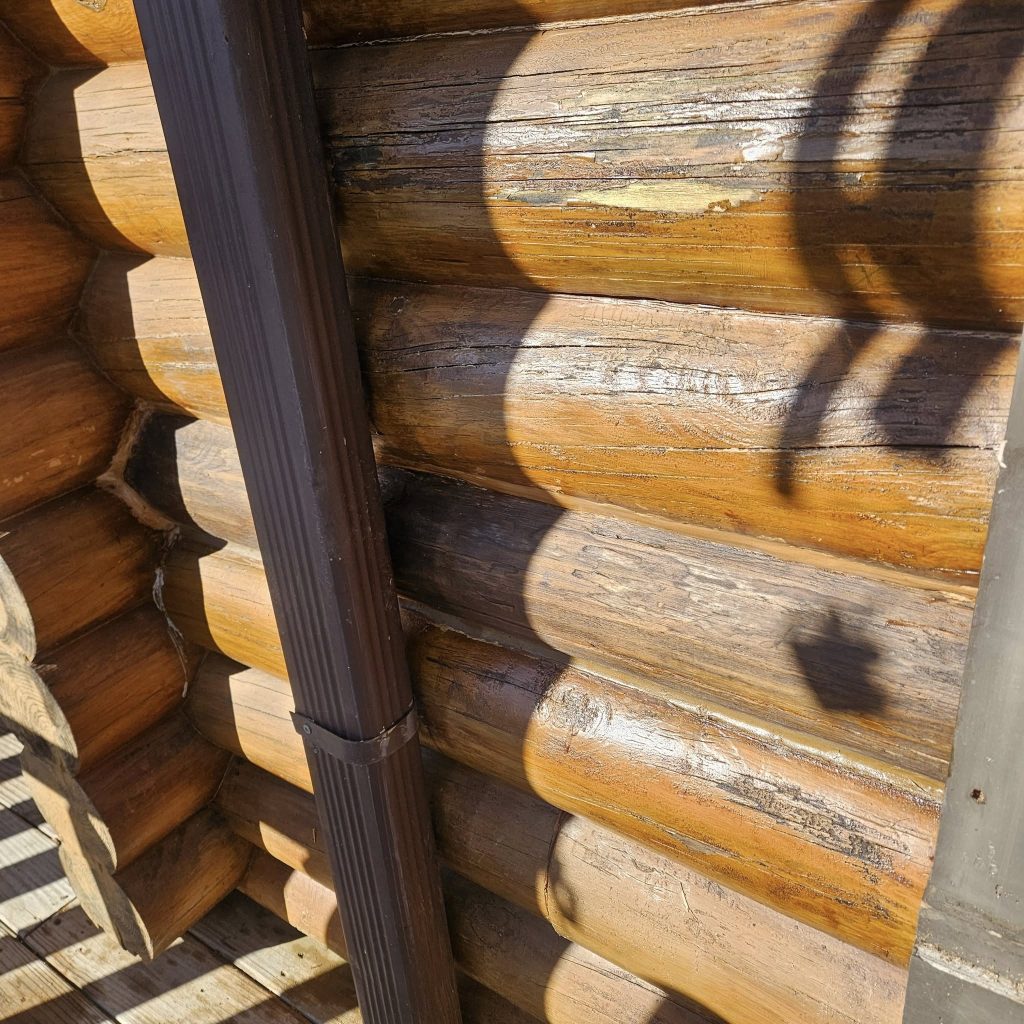
- Peeling or flaking within months
- Persistent mildew returning quickly
- Chinking pulling away or cracking soon after install
- Stain that looks patchy, overly dark in some areas, or overly light in others
If issues appear quickly, the cause is often poor prep or moisture that was never addressed.
When Log Home Maintenance Is Really Repair
Sometimes a contractor can do everything right and still uncover a bigger truth: the cabin needs repaired, not just maintenance.
Your log home may need repair or wood replacement when:
- Logs are soft, spongy, or crumbling
- Staining suggests ongoing moisture intrusion
- Lower logs show rot or repeated insect activity
- Gaps and movement are beyond what sealants can solve
When damaged wood is present, replacement may be the safest long-term option:
How KY Cabin Care Approaches Quality Work
KY Cabin Care is local, detail-driven, and focused on the long-term health of your cabin. We do not treat log homes like standard siding jobs. We evaluate the cabin’s exposure, materials, moisture risks, and finish history, then recommend the right solution for lasting protection.
If you want a second opinion, a maintenance plan, or a repair-first approach, reach out here:
For DIY-minded homeowners who want to better understand the basics, Perma-Chink Systems maintains a helpful resource library here:
Permachink Do It Yourself Technical Tips
This is Part 2 of KY Cabin Care’s 3-part Log Home Maintenance Basics series. Part 1: DIY Log Home Maintenance. Next up: Log Home Problems Explained: The Science Behind Rot, Moisture, and Movement