
Log homes are built to last, but not when your approach is “set it and forget it.” Wood moves with the seasons, finishes wear down, and small gaps can become moisture pathways if they are ignored. The good news is that a consistent, simple routine can prevent many of the expensive problems cabin owners typically have to worry about.
This guide focuses on exterior DIY log home maintenance you can realistically do yourself. It will help you spot issues early, protect your finish, and know when a project is drifting out of DIY territory.
Start With a Simple Log Home Maintenance Rhythm
You do not need a complicated calendar to keep a log home healthy. A good baseline is:
- Spring: Post-winter inspection (freeze/thaw, storm damage, new gaps)
- Mid-summer: Quick check for sun/UV wear and insect activity
- Fall: Prep for wet weather (gutters, drainage, touch-ups)
If you only do one thorough walkaround per year, choose spring or early fall when conditions are mild and you can see problem areas clearly.
The Walkaround Inspection: What to Look For on Your Log Home
A slow walk around your cabin is one of the most valuable things you can do. Focus on high-risk zones:
- Lower logs and sill areas: Splashback, wet soil, and poor drainage often show up here first.
- Corners and log ends: These areas can dry unevenly and develop openings.
- Around windows and doors: Look for separation, staining, or failed sealant.
- Rooflines, valleys, and penetrations: Leaks that start above often appear as staining below.
Common warning signs for log homes include:
- Dark staining that looks “wet” even after dry weather
- Soft spots (gently press with something blunt, like a screwdriver handle, not the tip)
- Cracking or separation in sealant/chinking
- A musty smell near certain walls or corners
- Insect holes, frass (fine sawdust), or increased bee activity
If you notice soft wood, persistent dampness, or significant staining, it may be time to explore Professional Log Home Repair.
Cleaning Your Log Home Exterior Without Damaging It
Cleaning is maintenance, not cosmetic fluff. Dirt and pollen hold moisture. Mildew feeds on it. A gentle wash once or twice a year helps your finish last longer.
DIY-safe cleaning on your log home:
- Use a soft brush and a log-safe cleaner
- Rinse thoroughly and allow plenty of dry time
- Avoid harsh bleach mixes that can damage wood fibers and finishes
A word of caution on pressure washing:
High pressure can fuzz the wood surface and drive water into checks and joints. If you do use a pressure washer, keep the pressure low, use a wide fan tip, and do not linger on one spot.
Sealing and Stain: How to Know When You’re Due
Most log homes need periodic maintenance coats, but there is no single “perfect” interval. Sun exposure, humidity, and the product previously used all matter.
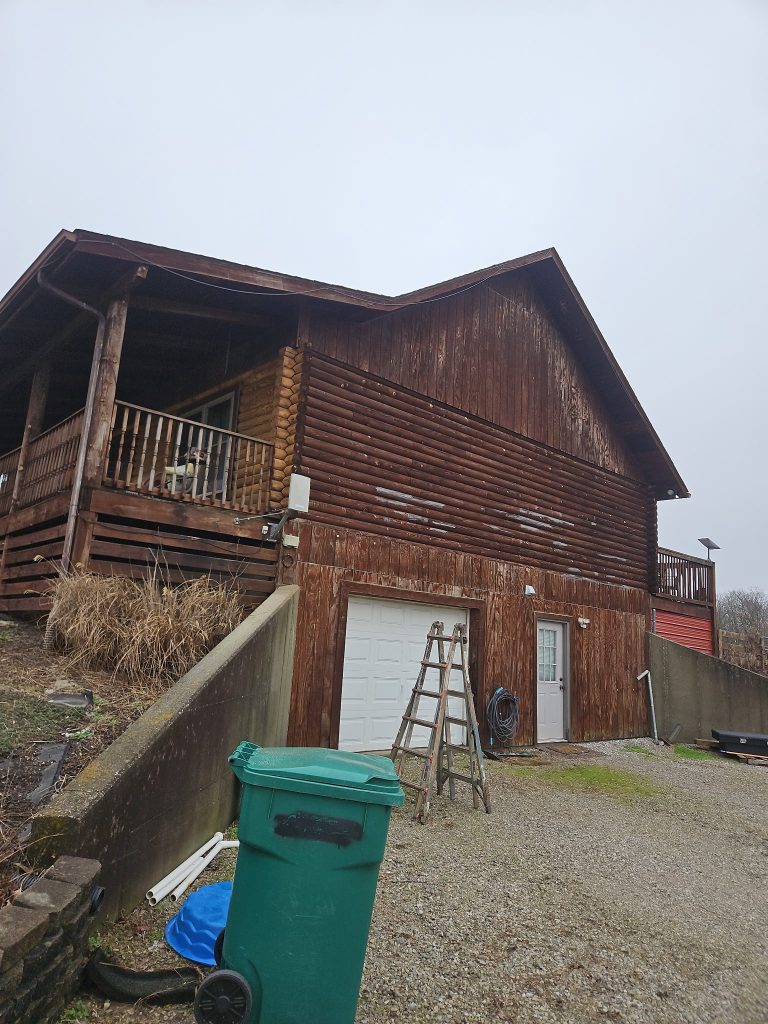
DIY ways to tell your log home finish is fading:
- Water no longer beads on the surface
- The stain looks chalky, dull, or uneven
- You see peeling or flaking in patches
- Exposed wood looks dry, gray, or rough
If your finish is failing but the logs underneath are still sound, you may be able to handle light touch-ups. If the failure is widespread, it is worth having a pro evaluate prep needs before resealing. Poor prep is one of the fastest ways to waste money on stain.
Chinking and Caulking: Small Touch-Ups That Matter
You do not need to redo an entire cabin to make progress. Small gaps around windows, doors, trim, and log joints can become draft and moisture problems.
DIY-friendly steps:
- Watch for cracking, shrinking, or separation
- Do small touch-ups when the weather is mild and dry
- Avoid sealing over damp wood or dirty surfaces
If you are seeing large gaps between logs, recurring separation, or signs of moisture intrusion, a professional assessment is the safer move.
Drainage: The Unsung Hero That Saves Cabins
Many log home problems are not “log problems.” They are water management problems.
Easy log home maintenance checklist:
- Keep gutters clean and downspouts flowing away from the foundation
- Reduce splashback with gravel or proper ground cover
- Keep soil from touching logs (wood and soil contact is a persistent risk)
- Make sure sprinklers are not soaking the cabin
These are boring fixes, but they can be some of the most effective.
When Do It Yourself Log Home Maintenance becomes DON’T Do It
DIY is great for observation, basic cleaning, and minor touch-ups. It becomes risky when the work affects structure, requires aggressive surface prep, or involves replacing wood.
Call KY Cabin Care when:
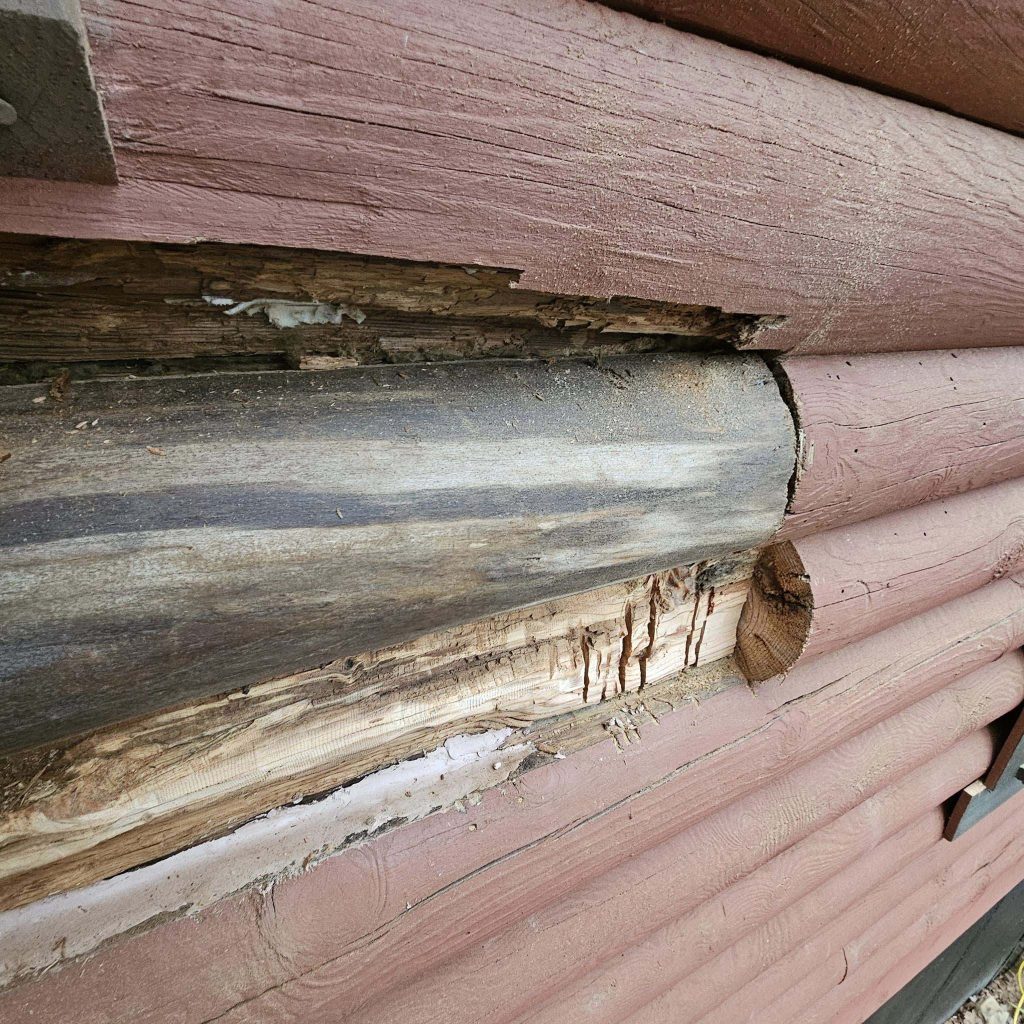
- You find soft or crumbling wood
- Staining suggests ongoing moisture intrusion
- You suspect rot in lower logs
- Sealant failure is widespread
- You want a long-term plan, not a patchwork of guesswork
When rot or deterioration is present, wood replacement may be the right next step:
Ready for a Professional Set of Eyes on Your Log Home?
A proactive inspection can save you a lot of money and stress. If you want help building a maintenance plan, addressing a problem area, or preparing for a larger restoration, reach out to KY Cabin Care here:
For homeowners who want additional DIY guidance, Perma-Chink Systems has a helpful resource library here:
This is Part 1 of KY Cabin Care’s 3-part Log Home Maintenance Basics series. Next up: How to Tell If Log Home Maintenance Work Is Being Done Right.