
DIY Log cabin restoration can be incredibly rewarding. There is something quite satisfying about cleaning up weathered logs, touching up a worn finish, or catching a maintenance issue before it becomes a major repair. For hands-on homeowners, some log home care tasks are absolutely worth learning.
But log cabin restoration is not the same as ordinary home maintenance. Logs move, absorb moisture, weather unevenly, and rely on proper sealing to stay protected. A project that looks simple on the surface can quickly become complicated if rot, failed stain, insect damage, or hidden moisture is involved.
So, what can you safely handle yourself, and when should you call a professional?
What Homeowners Can Typically Do Themselves
Many log cabin maintenance tasks are homeowner-friendly when the cabin is in generally good condition. These small steps can help extend the life of your exterior and make it easier to spot problems early.
DIY-friendly Log Cabin tasks may include:
- Seasonal walkaround inspections
- Light exterior cleaning
- Clearing leaves and debris away from the cabin
- Cleaning gutters and checking drainage
- Watching for mildew, dark staining, or insect activity
- Small caulking touch-ups in accessible areas
- Monitoring whether water still beads on the stained surface
The trick is knowing that DIY maintenance is mostly about prevention and observation. It helps you keep the cabin clean, dry, and protected while identifying issues before they spread.
Where DIY Restoration Gets Risky
Restoration becomes riskier when the job involves removing old finishes, repairing damaged logs, sealing large gaps, or applying products across the entire exterior. These projects require the right surface preparation, tools, materials, timing, and weather conditions.
DIY restoration can go wrong when homeowners:
- Apply stain over dirt, mildew, or failing finish
- Use high pressure washing that drives water into the logs
- Seal over damp wood
- Miss rot hidden behind surface discoloration
- Use the wrong caulking or chinking product
- Ignore drainage or moisture sources
- Assume a fresh stain will fix damaged wood
A bad restoration job can be expensive to correct. If the surface is not properly prepared, stain may fail early. If gaps are sealed incorrectly, moisture may become trapped. If rot is covered instead of repaired, the damage can continue under the finish.
When to Call a Professional for Log Cabin Restoration
It’s time to call a professional when the project goes beyond light maintenance or when you are unsure what the cabin actually needs.
Professional help is especially important if you notice:
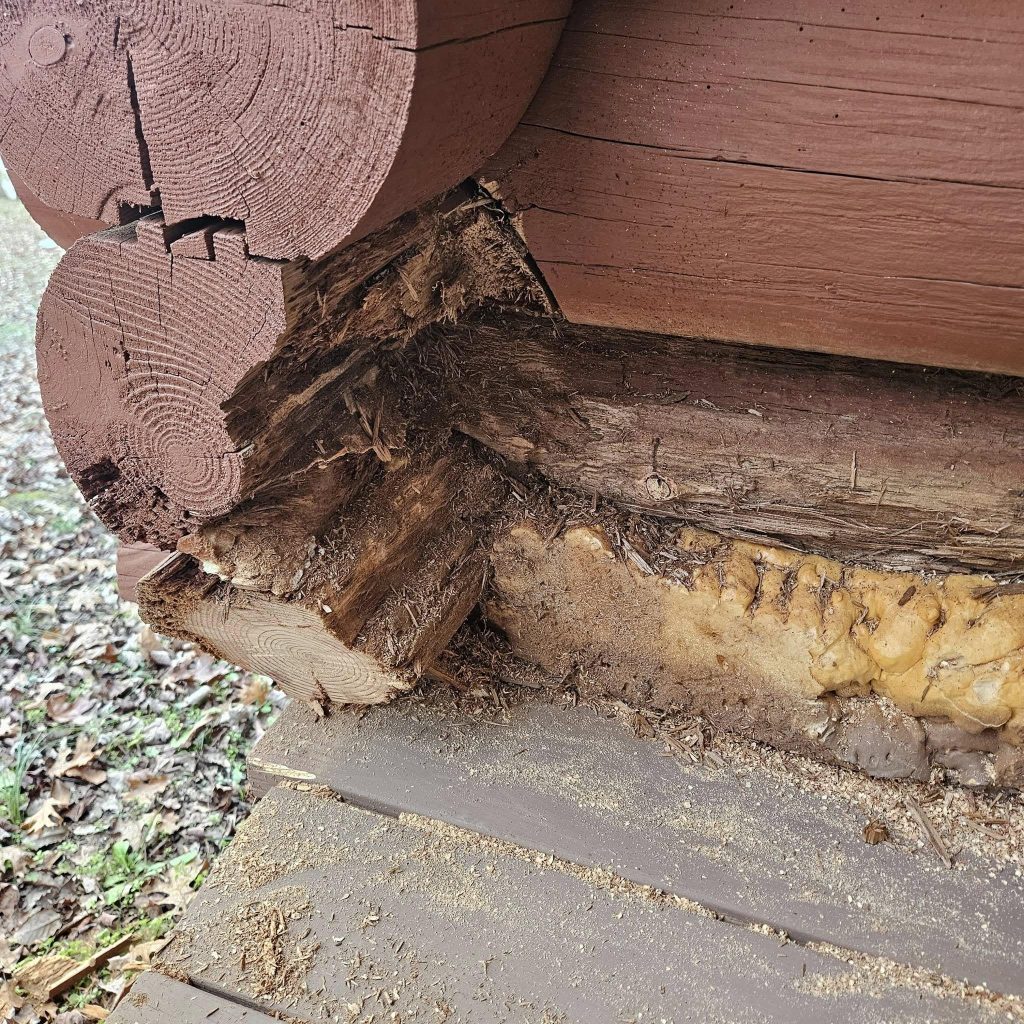
- Soft, spongy, or crumbling wood
- Dark stains that keep returning
- Peeling, flaking, or uneven stain
- Widespread caulking or chinking failure
- Insect holes, tunnels, or sawdust-like debris
- Lower logs that stay damp
- Gaps around windows, doors, corners, or log ends
- A cabin that needs full refinishing instead of a simple touch-up
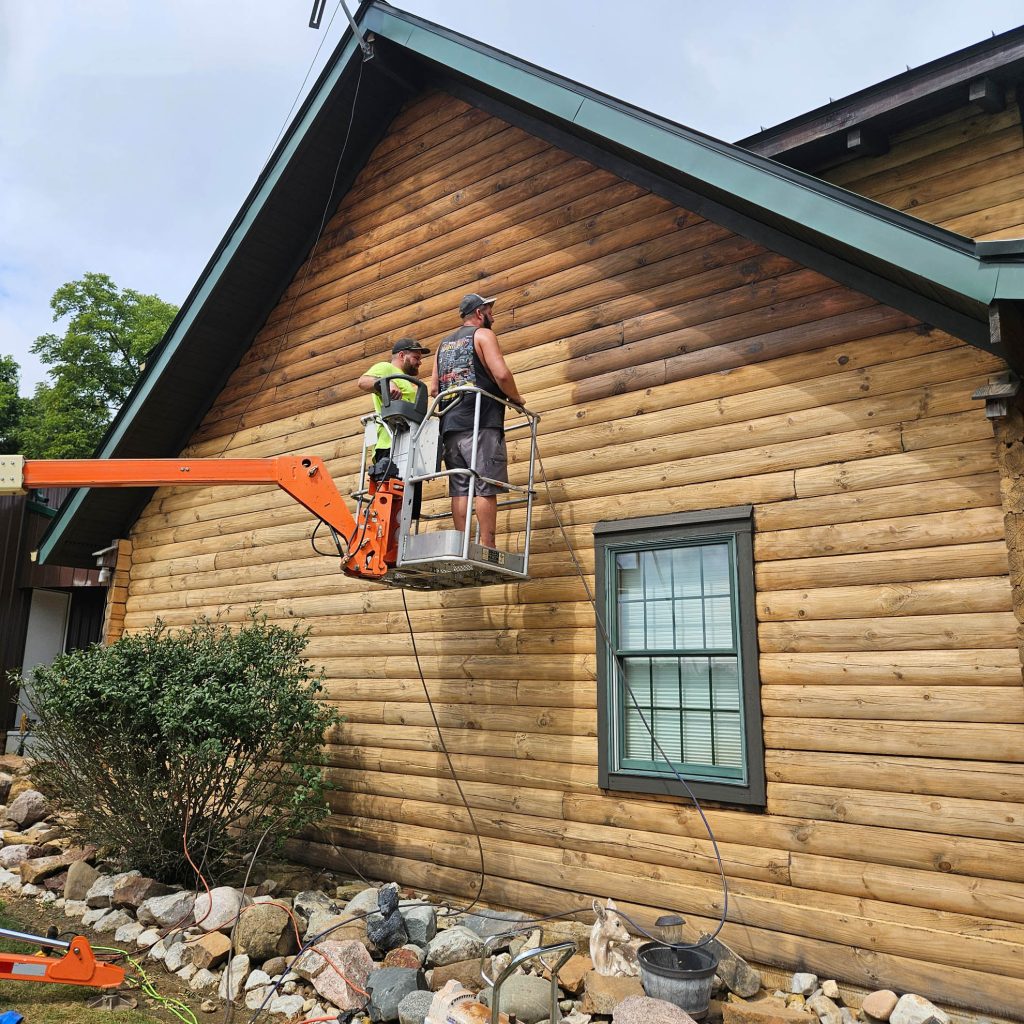
KY Cabin Care provides full-service log home restoration in Kentucky, including repair, media blasting, staining, caulking, weatherproofing, and wood replacement.
Learn more about professional cabin restoration!
Why Surface Preparation Matters So Much
One of the biggest differences between DIY work and professional restoration is surface preparation. A log home finish is only as good as the surface underneath it.
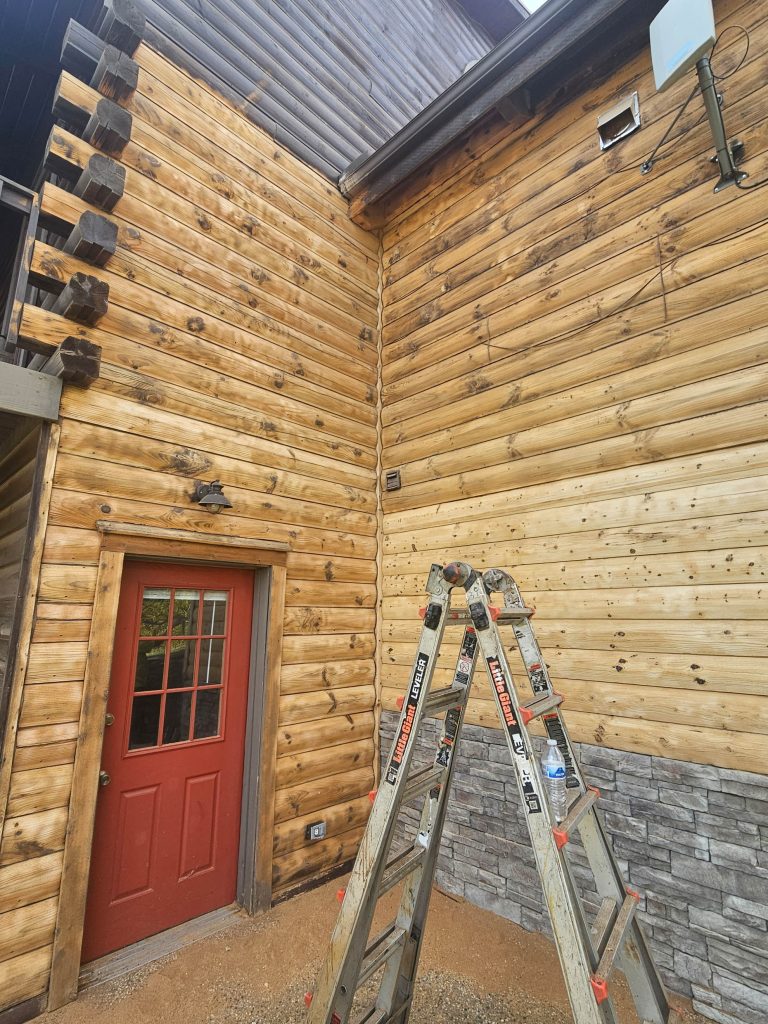
Before staining or sealing, the logs may need to be cleaned, dried, repaired, sanded, brushed, or media blasted. Old stain, mold, mildew, dirt, and loose finish must be removed so new products can bond properly.
Media blasting may be recommended when a cabin has old finish buildup, heavy discoloration, or uneven surfaces that need a clean start.
Learn more about media blasting!
This step is not just about appearance. Proper prep helps the new stain absorb evenly, last longer, and protect the logs more effectively.
Repairs Should Come Before Stain or Sealant
A fresh finish can make a cabin look better, but it cannot fix damaged wood. If logs are rotted, insect-damaged, soft, or structurally compromised, those issues should be addressed before staining or weatherproofing.
Professional log home repair may include correcting damaged areas, addressing moisture problems, restoring failed sealants, or preparing the cabin for a larger restoration project.
In some cases, damaged logs may need to be replaced rather than patched.
This is where a professional inspection can save money. Treating the source of the problem helps prevent the same damage from coming back.
Learn more about professional log cabin repair!
Learn more about log cabin wood replacement!
DIY Can Help You Maintain. Professionals Help You Restore.
A good way to think about the difference is this:
DIY maintenance helps you care for a healthy cabin. Professional restoration helps bring a worn, damaged, or neglected cabin back into proper condition.
Homeowners can do a lot to keep their log homes in good shape. But when the project involves full refinishing, failed stain, moisture damage, rot, wood replacement, or large-scale sealing, a professional approach is usually the safer investment.
Choose KY Cabin Care for Professional Log Cabin Restoration
Your log cabin deserves more than guesswork. KY Cabin Care understands how Kentucky weather affects log homes and how each service fits into long-term protection. Whether your cabin needs maintenance guidance, surface prep, staining, caulking, repair, weatherproofing, or full restoration, our team can help you choose the right path.
If you are unsure whether your project is DIY-friendly or ready for professional help, contact KY Cabin Care today to schedule an inspection or request an estimate.