If you own a log home, you’ve probably heard the terms chinking and caulking used interchangeably. While they serve a similar purpose, they are not the same thing—and using the wrong one (or using it incorrectly) can lead to air leaks, moisture intrusion, and long-term damage.
Understanding the difference between chinking and caulking can help you make better maintenance decisions and protect your log home for years to come.
Why Log Homes Need Flexible Sealants
Log homes naturally expand and contract with changes in temperature and humidity. As logs settle and shift, gaps can form between them or around windows, doors, and corners.
Chinking and caulking are designed to:
- Keep moisture out
- Reduce drafts and energy loss
- Block insects and pests
- Protect logs from rot and decay
The key difference lies in where and how each product is used.


What Is Chinking?
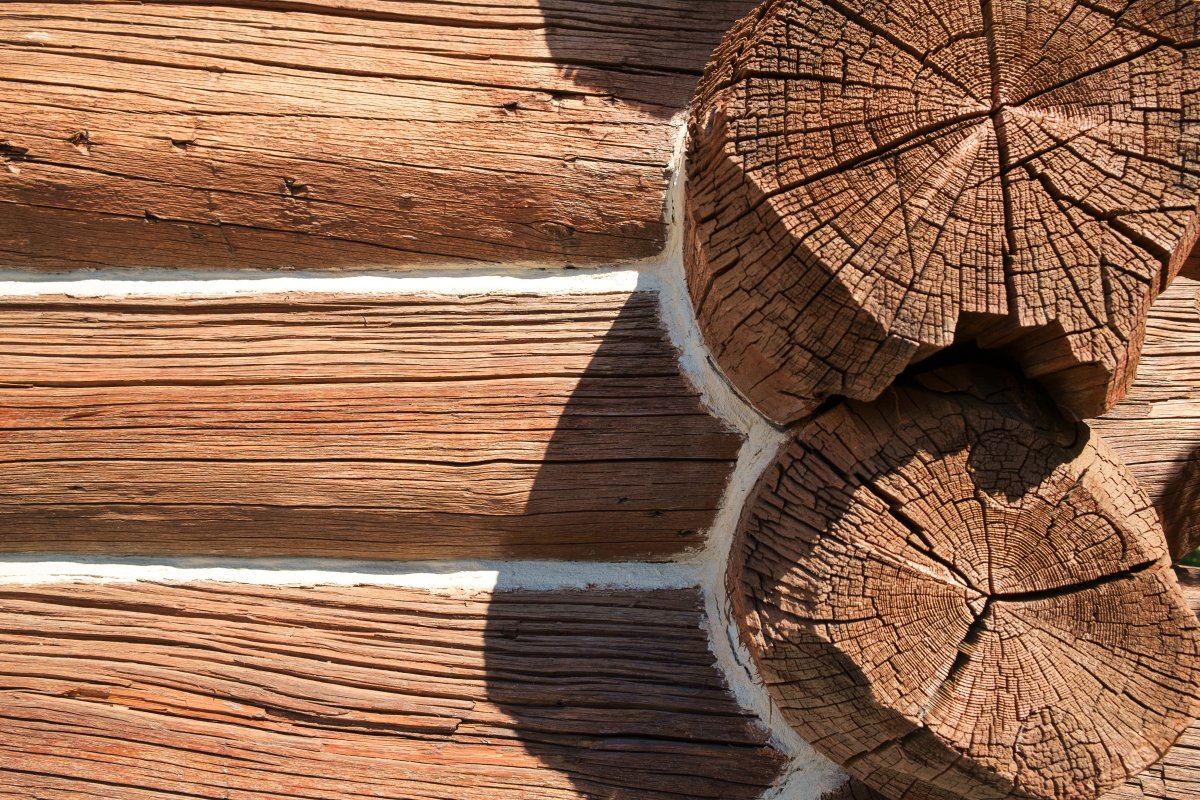
Chinking is a flexible, elastic material used to fill the wide gaps between logs. Traditionally, chinking was made from mud or mortar, but modern chinking products are designed to move with the logs without cracking or separating.
Chinking is typically:
- Thicker and more visible
- Used between horizontal logs
- Applied in wider joints
- Designed to stretch and compress as logs move
In addition to sealing gaps, chinking plays a major role in the appearance of a log home. Clean, well-maintained chinking gives a cabin a finished, uniform look.
What Is Caulking?
Caulking is a thinner, more precise sealant used in smaller gaps and joints. It’s commonly applied:
- Around windows and doors
- At log ends and corners
- Along trim boards
- In narrow cracks or checks
Caulking is not meant to replace chinking. Instead, it complements it by sealing areas where chinking would be too thick or unnecessary.
Chinking vs. Caulking: Key Differences
While both products seal gaps, they serve different purposes:
- Chinking: Wide gaps between logs, highly flexible, visible
- Caulking: Small joints and seams, more discreet, detailed work
Using caulking where chinking is needed can cause premature failure. Likewise, using chinking in small joints can lead to improper adhesion and messy results.
How to Tell What Your Log Home Needs
Not sure whether your cabin needs chinking, caulking, or both? Here are a few signs to watch for:
- Visible gaps between logs → likely chinking
- Drafts near windows or doors → caulking
- Cracked, shrinking, or separating material → replacement needed
- Water stains near seams → sealant failure
A professional inspection can quickly determine the right solution and prevent minor issues from turning into major repairs.
DIY vs. Professional Application
Some homeowners handle small caulking touch-ups themselves. However, full chinking projects require experience, proper surface prep, and the right materials.
Improper application can:
- Trap moisture behind the sealant
- Prevent logs from moving naturally
- Cause cracking or separation
- Lead to hidden rot
At KY Cabin Care, we assess how your home was built, how it has settled, and what materials will work best long-term. If underlying damage is discovered, we can address it through professional log home repair.
When Repairs Go Beyond Chinking and Caulking
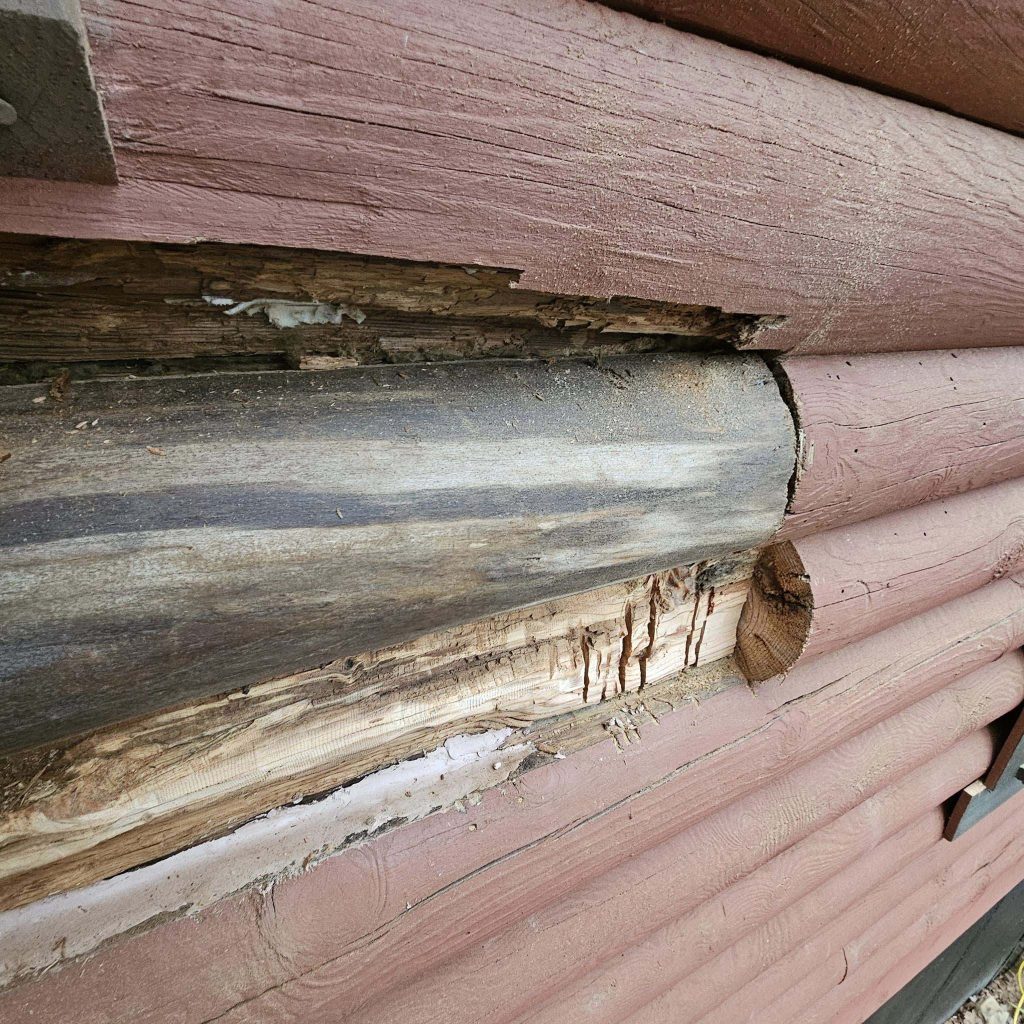
Sometimes failing chinking or caulking is a symptom—not the root problem. Moisture intrusion can damage logs themselves, especially in lower courses.
If needed, we also provide precise wood replacement services to restore your cabin’s structure before sealing it properly.
Does My Log Cabin Need Caulking or Chinking?
Homeowners often ask us very specific questions, and for good reason. Two of the most common we hear are: Does my log cabin need caulking? and Does my log cabin need chinking? The answer is that many cabins need both, but in different places and for different reasons.
If you’re noticing small gaps around windows, doors, trim boards, or log ends, your cabin likely needs caulking. If you’re seeing wider gaps between horizontal logs, failing material that’s pulling away, or drafts coming through log joints, your cabin likely needs chinking. In many cases, the real question is not one or the other, but does my cabin need caulking or chinking right now—and where?
A professional assessment can quickly determine what your log home actually needs, ensuring the right materials are used in the right places.
Choosing the Right Solution for Your Cabin
Every log home is different. Age, construction style, exposure, and maintenance history all play a role in determining whether chinking, caulking, or a combination of both is the best approach.
KY Cabin Care takes the time to evaluate your home and recommend the solution that protects it—not just temporarily, but for the long haul.
Work With KY Cabin Care
If you’re noticing gaps, drafts, or failing sealants, it may be time for a professional assessment. KY Cabin Care proudly serves log homeowners across Kentucky with honest guidance and skilled craftsmanship.