Dry rot is one of the most destructive issues a log cabin can face, and one of the sneakiest. Caused by wood-decaying fungi, dry rot can weaken logs from the inside out, compromising both structural integrity and long-term value. The earlier you catch it, the better your chances of a successful (and affordable) repair.
Here’s what every log cabin owner should know about identifying, treating, and preventing dry rot—plus when it’s time to call in a pro.
What Is Dry Rot, Really?
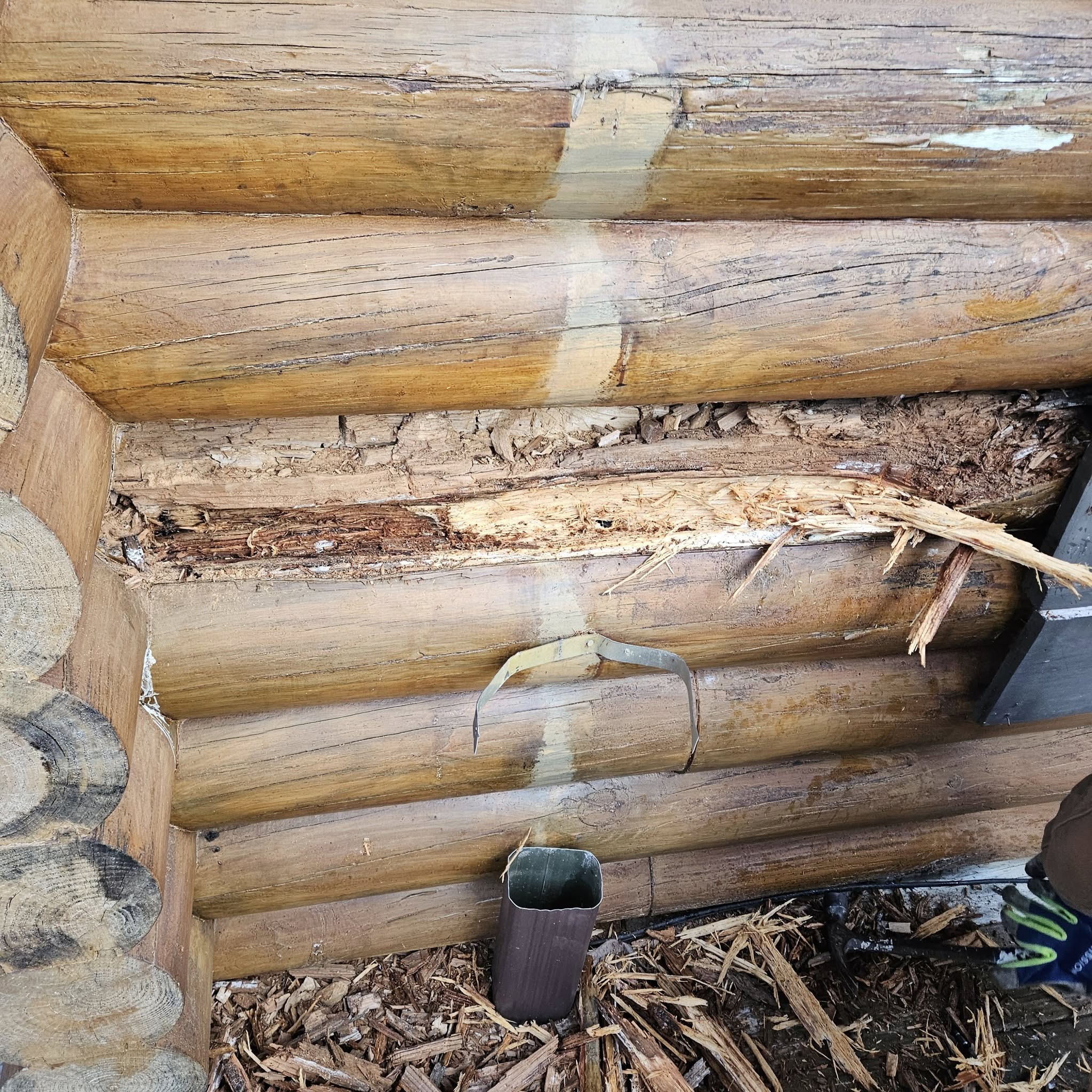
Despite the name, dry rot is caused by moisture. Fungi feed on damp wood, breaking down its fibers and leaving it brittle, soft, or crumbly. It thrives in dark, poorly ventilated areas. Once it takes hold, it can spread quickly.
Common causes include:
- Water infiltration from roof leaks or poor drainage
- Damp soil in contact with lower logs
- Failed chinking or sealing
- Poor airflow or lack of maintenance
Over time, dry rot can cause logs to shrink, crack, and even collapse in severe cases. That’s why early detection and treatment are critical.
Signs of Dry Rot in Log Cabins
Dry rot often hides below the surface, but there are still visible clues you can watch for:
- Discolored or darkened wood
- A musty or damp smell
- Cracked or shrinking logs
- Soft or spongey areas when pressed
- Orange-brown dust (a sign of fungal spores)
- Wood that crumbles when touched
Lower logs and sill logs are especially vulnerable, since they’re closest to the ground and more likely to encounter moisture.


How Professionals Treat Dry Rot
At KY Cabin Care, we take a multi-step approach to treating dry rot, starting with a thorough inspection. Once we identify the affected areas, we typically:
- Stop the moisture source. Fix drainage issues, flashing, or roof leaks.
- Remove decayed wood. Rotted logs are carefully extracted to prevent further spread.
- Replace or reinforce. We use compatible materials to match the look and function of your existing logs. Learn more here: Log Home Wood Replacement
- Apply treatment. We use fungicides or borate-based products to prevent future growth.
- Seal and protect. Once the structure is dry and repaired, we re-chink, stain, or seal as needed to protect the surrounding logs.
Our goal is to restore both the look and integrity of your home—safely and durably. Learn more about our log home repair process here: Log Home Repair
Can You DIY Dry Rot Repair?
If you catch dry rot early, you might be able to handle small sections yourself. Removing surface mold, improving airflow, or applying a borate treatment can slow the spread. But be cautious:
- You may not see the full extent of internal damage.
- Improper removal can leave spores behind.
- Without replacing the affected logs, structural integrity is compromised.
If there’s any uncertainty, it’s best to bring in professionals with the right tools, safety protocols, and experience.
Prevention: Your Best Line of Defense
The best way to deal with dry rot? Keep it from happening in the first place. Here are a few smart practices to help protect your cabin:
- Keep gutters and downspouts clear and flowing away from the foundation
- Re-stain or reseal your cabin regularly
- Make sure chinking is intact and weatherproof
- Ensure proper airflow inside and out
- Inspect your cabin seasonally for signs of water intrusion
These simple steps can save you thousands in future repairs.
When to Call KY Cabin Care
Dry rot isn’t just unsightly—it can compromise your home’s structure and safety. If you suspect you’re dealing with rot, sagging logs, or moisture issues, KY Cabin Care is here to help. We specialize in wood replacement, full repairs, and long-term log home maintenance across Kentucky.
Visit Contact KY Cabin Care to schedule your consultation.
Learn More About Structural Repair
For more insight into how professionals approach cabin restoration, we recommend this engineer-focused article from STRUCTURE Magazine: Repair of Log Cabins
While it leans technical, it highlights just how important it is to deal with dry rot the right way… especially when your home is on the line.